

Pepper is thirteen, six pounds, and a Yorkshire Terrier, which means he has spent most of his life being carried up onto things and then, one day, quietly deciding he would rather not. The sofa used to be his. Now he stands in front of it and looks at me. That look is what sent me to Dr. Salazar in November 2025, and what came out of that visit was a diagnosis of mild arthritis in his hips and a loose kneecap on his left back leg, plus a suggestion I did not expect: start him on a joint supplement.
I am not a vet. I am a retired dental office manager in Tucson who has had small dogs for forty years and who is honest about aging, his and mine. What I can tell you is what twelve months of one soft chew every morning actually looked like in this house. The chew is Nutramax Laboratories Cosequin for Small Dogs, the soft chews, the 45 count container, and it has been in my kitchen cabinet since the week of that diagnosis.
The Quick Verdict
A year of daily chews bought a real but modest improvement in how Pepper gets up from a nap. It did not fix the loose kneecap, it did not bring back jumping, and it is a genuine monthly expense. I would buy it again on Dr. Salazar's word.
Amazon Check Today's Price →The one thing he takes every single morning, and has for a year
Cosequin for Small Dogs is a soft chew with glucosamine, chondroitin, MSM and omega-3s, so it replaced the separate glucosamine I was pricing out. Pepper gets one chew, broken in two, with breakfast. Ask your vet about the amount for your dog's weight rather than copying mine.
Amazon Check Today's Price on Amazon →How I've Used It
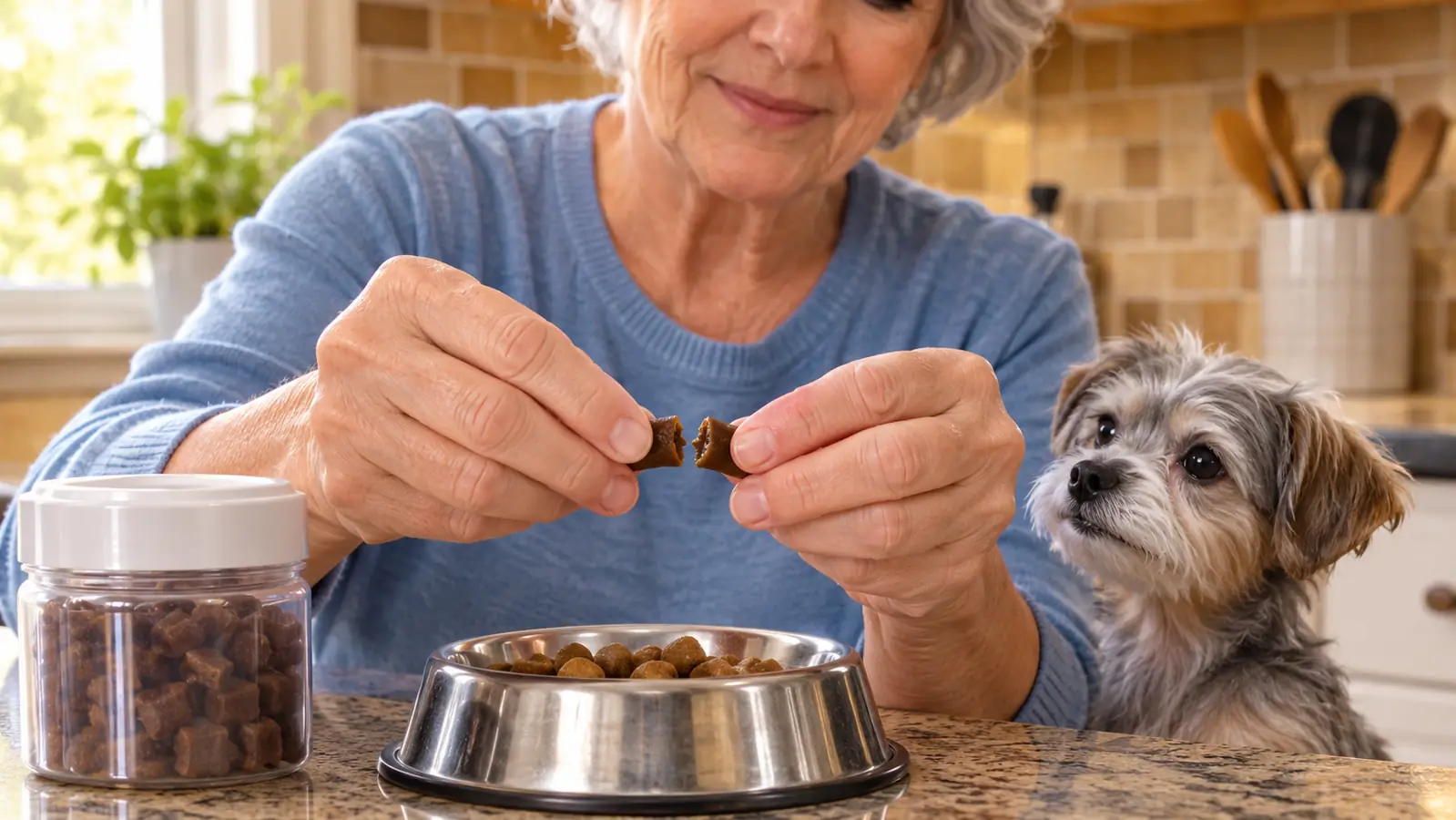
One chew every morning with breakfast, broken into two pieces so a six pound dog with small teeth can manage it. Dr. Salazar set the amount for his size, and I want to be plain that the label and your own vet are the right sources for your dog, not a stranger's routine. The container lives in the kitchen cabinet to the left of the sink, next to the coffee, which is how it became part of the morning instead of something I had to remember.
For the first two weeks I watched him like a hawk and saw nothing, which was discouraging. What I have learned since, from Dr. Salazar and from living with an old dog, is that this is not a thing you judge in a fortnight. Joint supplements are not pain medication. You give them time. I kept a note on the refrigerator for the first three months, one line a week, because otherwise a year later you are relying on your feelings and your feelings are unreliable.
The container lasted a little over six weeks at one chew a day, so a 45 count is not a year's supply. That is worth knowing before you order, because the arithmetic matters more than the marketing. Nothing else in this house came before the Cosequin except an old flat fleece pad on the floor, and I want to say clearly that no other joint supplement gets given here. His label carries glucosamine, chondroitin, MSM and omega-3s, and Dr. Salazar was satisfied that was enough to be going on with.
Before the Cosequin there was a hard chew, a glucosamine tablet I picked up at a pet store on a Saturday because it was the only thing on the shelf in his size. Pepper turned his nose up at it three mornings running. I tried wrapping it in a piece of turkey. He ate the turkey and left the tablet sitting on the tile. That is when I stopped improvising and asked Dr. Salazar, and her answer was a soft chew, which for a six pound dog with a slightly crowded mouth is simply an easier thing to eat. Now the routine takes about ten seconds: coffee on, kibble in the bowl, one chew split in two, set on top. He checks the bowl before he checks anything else in the house.
What Changed, and Roughly When
The first thing I noticed came somewhere around week six to eight, and it was small enough that I nearly missed it. Getting up from a nap used to take him two or three tries, back legs first wobbling, then a little rocking motion to get the front end organized. Somewhere in that window I realized he was doing it in one motion again. Not fast. Not springy. Just one motion instead of three.
The list on the refrigerator is gone now, but I remember the shape of it. Week one: same. Week three: same, maybe a hair slower, and I was sure I had wasted my money. Week six: I wrote that he got up on the first try after his afternoon nap, and then I stood in the kitchen feeling foolish for being so pleased about something that small. Week eight: two good mornings in a row, which had not happened since the previous summer. Week twelve: I stopped writing it down, which is its own kind of answer. If you are going to try this, keep a note somewhere you cannot ignore. A year later you will not trust your memory, and you should not.
That is the entire claim I am making, and I make it carefully. He was not cured. He was not suddenly a young dog. The stiffness that used to greet every waking was a little less, consistently, from around that point forward. Twelve months in, on a bad morning in wet weather, he still gets up stiff. But the ordinary mornings, the ones that make up most of a life, got easier.
What did not change is the loose kneecap. That left back leg still slips out of place now and then, the way it did before, and the chew has done nothing for it that I can see. Dr. Salazar explained it as a mechanical problem, a joint that is not sitting the way it should, and no supplement is going to change the mechanics. I appreciated her saying so rather than letting me spend a year hoping.
And the jumping never came back. He does not get on the sofa on his own and he does not get on the bed. That is not a failure of the Cosequin so much as a fact about a thirteen-year-old dog. We solved the sofa a different way, which I will get to.
The Ingredient Side, Without the Sales Voice
I read the label the way I used to read insurance forms for a living, which is to say looking for what is actually stated. Glucosamine hydrochloride and sodium chondroitin sulfate are the two you will see in almost every joint product on the shelf, and they are the ones Dr. Salazar named when she suggested it. MSM is there too. The listing also notes omega-3 fatty acids for skin and coat, which is a nice thing for an old dog whose coat has gone a bit dry.
One allergen note I want to flag because it matters: the label lists fish as an allergen, from the omega-3s. If your dog has a fish sensitivity, that is a conversation to have with your vet before the first chew, not after. I noticed it on the label, not on any website.
Nutramax Laboratories has been making pet supplements for a long time, and the listing carries the phrase about being a veterinarian recommended brand, which is the kind of thing you either trust or you don't. What I trusted was the person who examined my dog and knew her name. When Dr. Salazar said the word Cosequin, I stopped shopping.
One thing I did before ordering the second container was call the clinic and ask whether I could add a second joint product on top of this one. I had a bottle in the pantry from a well-meaning neighbor and I figured two would be better than one. Dr. Salazar said no. Doubling up on glucosamine is not a good idea, she said, and if the chew already carries chondroitin and MSM there is no reason to stack another supplement beside it. That saved me a purchase and, more to the point, it saved me from a mistake I would have made out of pure enthusiasm. If you are already giving your dog something, say so at the appointment and bring the label with you.
Getting up from a nap went from three tries to one. That was the whole improvement, and it was worth a year of mornings.
Where It Fits in the Rest of the House
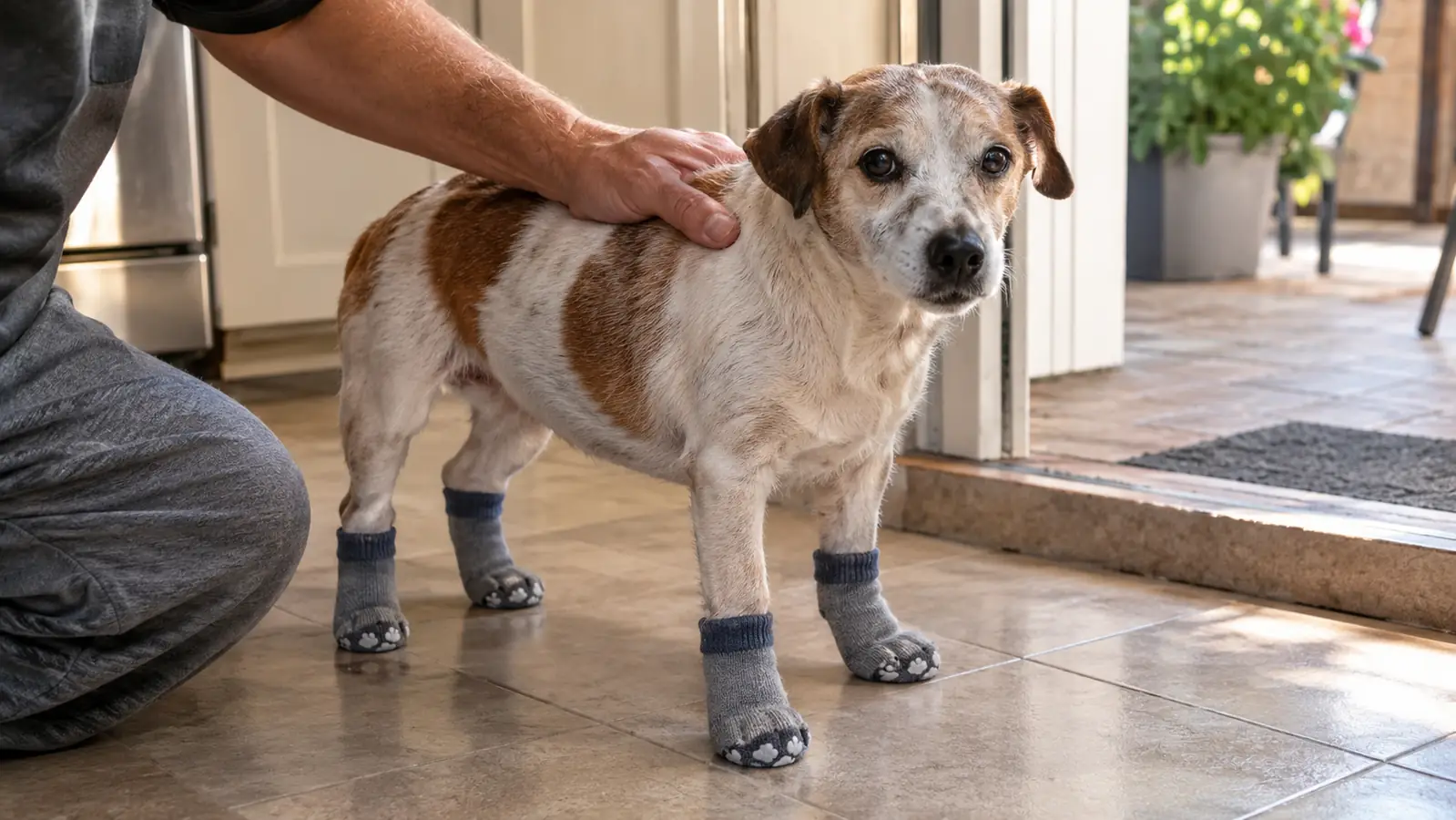
A supplement is one piece. An old dog on tile is a whole set of problems, and the Cosequin addressed exactly one of them. Pepper's back legs splayed on the kitchen floor in March 2026, which is how the grip socks happened; he wears them indoors for a few hours morning and evening, never overnight, never on walks, and I check his paws every day when they come off. In April he misjudged a jump at the sofa and yelped, which is how the foam stairs happened. In June, after a rough week, I bought a rear lift harness, cinched almost all the way because it is roomy on six pounds.
The walk is the part nobody warns you about. We go around the block early, before the heat comes up, ten to fifteen minutes, and the difference between a good morning and a bad one shows up in the first fifty yards. On a good morning he sets the pace and I follow along behind him with the leash loose. On a bad morning he stops at the corner, looks back at the house, and that is a day the harness comes out for the step at the kitchen door and we cut the loop short. The chew did not change that pattern. What it changed is how many mornings land in the first group instead of the second.
The chew is the only thing in this house I reorder on a schedule, roughly every six weeks, and it is the only Nutramax Laboratories product I buy. Everything else was a one time purchase: the socks, the stairs, the bed, the harness. That is worth thinking about if you are working out what a senior dog actually costs you month to month. The supplement is the subscription. The rest is equipment.
The joint support from the inside is the chew. The sure footing is the socks. The sofa is the stairs. Sleep is the orthopedic bed that took him three nights to accept and about two weeks to actually help. Nobody sells all of that as one thing, so you build it a piece at a time and you pay attention to which piece did what.
If I had to rank them for a small senior dog, I would say the chew and the footing matter most, and the stairs matter most for your own peace of mind. But I would not skip the chew. It is the only one of them that works on the joint itself rather than on the dog's relationship with the floor.
What I Liked
- A soft chew he takes without a fight, which for a picky small dog is most of the battle
- Carries glucosamine, chondroitin, MSM and omega-3s in one chew, so it replaced a separate glucosamine purchase
- Around week six to eight, getting up from naps got noticeably easier and has stayed that way
- Made for small dogs, so the chew is a size a six pound dog can actually chew
- From Nutramax Laboratories, a company that has been in pet supplements a long time and is recommended by my own vet
Where It Falls Short
- It did nothing for the loose kneecap, which is a mechanical problem a supplement cannot reach
- It did not bring him back to jumping on furniture, and I want to be clear that it will not
- A 45 count lasts a little over six weeks at one chew a day, so the cost adds up over a year
- Fish is listed as an allergen, so dogs with a fish sensitivity need a vet conversation first
- You will not know for six to eight weeks, which is a long time to keep paying for something unproven
Who This Is For
This is for the owner of a small senior dog who has heard the word arthritis from a vet and wants to do the ordinary, unglamorous thing about it. Under twenty five pounds. Already slowing down on the getting up rather than in obvious pain. Someone who can commit to a daily chew for two months before deciding anything, because that is the actual test. If you have been quietly pricing out three different joint products and wondering which one to start with, start with the one your vet names, and if it happens to be this one, my experience says it is a reasonable place to be.
Who Should Skip It
Skip it if your dog is in visible pain, yelping, refusing to walk, or dragging a leg. That is a vet appointment, not a supplement, and the same afternoon if you can manage it. Skip it if your dog has a diagnosed fish allergy, unless your vet says otherwise. Skip it if you are looking for something that will get an old dog back on the furniture, because it will not, and you will end up disappointed in a product that is doing a smaller job honestly. And skip it if you cannot see it through eight weeks, because two weeks of anything tells you nothing about a joint.
One more thing, and I mean this kindly. If you are the person who buys the chew and then also buys the socks and the bed and the stairs in the same week, you will never know which one helped. I bought mine months apart, mostly by accident, and it turned out to be the most useful thing about the whole year. Change one thing at a time, and write it down. Check with your veterinarian before you start, especially with a diagnosed condition, and follow what they tell you about the amount rather than what I told you about mine.
Twelve months in, this is the one thing I still buy on schedule
One soft chew with breakfast, broken in two, from a container I refill about every six weeks. It gave him easier mornings and it gave me something to do besides worry. Ask your vet about the right amount for your dog, then give it eight weeks before you judge it.
Amazon Check Today's Price on Amazon →