Short answer: the DOK TigerToes grip sock is the one that has been on my dog for eight months, and I would buy it again tomorrow. The Expawlorer sock is the one I would try next if my dog were a determined sock puller with skinny little legs. I have not owned the Expawlorer. I have held its listing, its size chart and its photos up against the sock I do own, and that is the whole of my comparison. No side-by-side box test, no lab, no sponsorship. Just a retired woman in Tucson with a tape measure and a 13 year old Yorkie who splays on the kitchen tile the second I stop paying attention.
Here is how I got here. In March 2026 Pepper's back legs went out from under him on the kitchen tile. He did not fall, exactly. He did that scrambling thing where the front end keeps going and the back end writes its own sentence, and then he stood there looking up at me like I had installed the floor wrong. Our vet, Dr. Salazar, had already told us that the loose kneecap on his left back leg and the mild arthritis in his hips would make hard floors interesting. She did not prescribe socks. She suggested sure footing and shorter, more frequent walks. The DOK TigerToes socks were my answer for the tile, and eight months later they are still my answer.
| DOK TigerToes | Expawlorer | |
|---|---|---|
| Grip when the sock twists | Tread is built to keep grabbing even if the sock rotates under the paw | Tread sits on the sole and works best when the sock stays square under the pad |
| How it stays on | Hook and loop strap at the ankle plus a pull-on stretch cuff | Hook and loop strap that wraps higher up the leg, with more surface to hold |
| Hold on a narrow ankle | Snug at the ankle, which is where a busy back foot works it loose first | More fabric above the ankle gives a determined dog less to pull against |
| Sizing | Sold by measured paw width; Small is listed at 1.7 to 1.9 inches | Sold by its own published size chart; measure before you order |
| Fabric and care | Elastic cotton and nylon, machine wash | Soft knit, machine wash per the listing |
| What comes in the box | Four socks | Four socks |
| Best for | A dog whose back end slides out on tile or hardwood | A dog who has already defeated two pairs of socks |
How I Compared Them
Two things first, so you know exactly what you are reading. I own the DOK in extra small, not the Small. The listing puts Small at 1.7 to 1.9 inches of paw width, and a six pound Yorkie paw is narrower than that, so I measured across the widest part of his front paw with him standing on a piece of paper and ordered down a size. That size dropdown is the most important thing on the page, and it is the same story with the Expawlorer. Both brands sell by measured paw width rather than by breed, and neither chart is generous to a tiny dog.
For the Expawlorer side of this, I read the listing the way I read any listing, looking for four things: the strap, the cuff, the tread and the size ladder. I did not buy a set to test, so where I say something about the Expawlorer, it is what the seller publishes and what the photos show, not what I felt in my hand on my own dog's foot. If that is not enough for you, I understand. I would rather tell you my limit than dress up a guess as a test result. What I did do was sit at the kitchen table on a Saturday morning with both listings open in two windows and a yellow legal pad, and I wrote the strap height, the closure type, the fabric, the care instructions and the size ranges down side by side. Then I read the one and two star reviews on both, because that is where people describe the failure instead of the feature. The failure stories on socks are almost always the same story. It rotated, then it came off, then the dog chewed the toe out of it while you were in the other room.
Where DOK TigerToes Wins
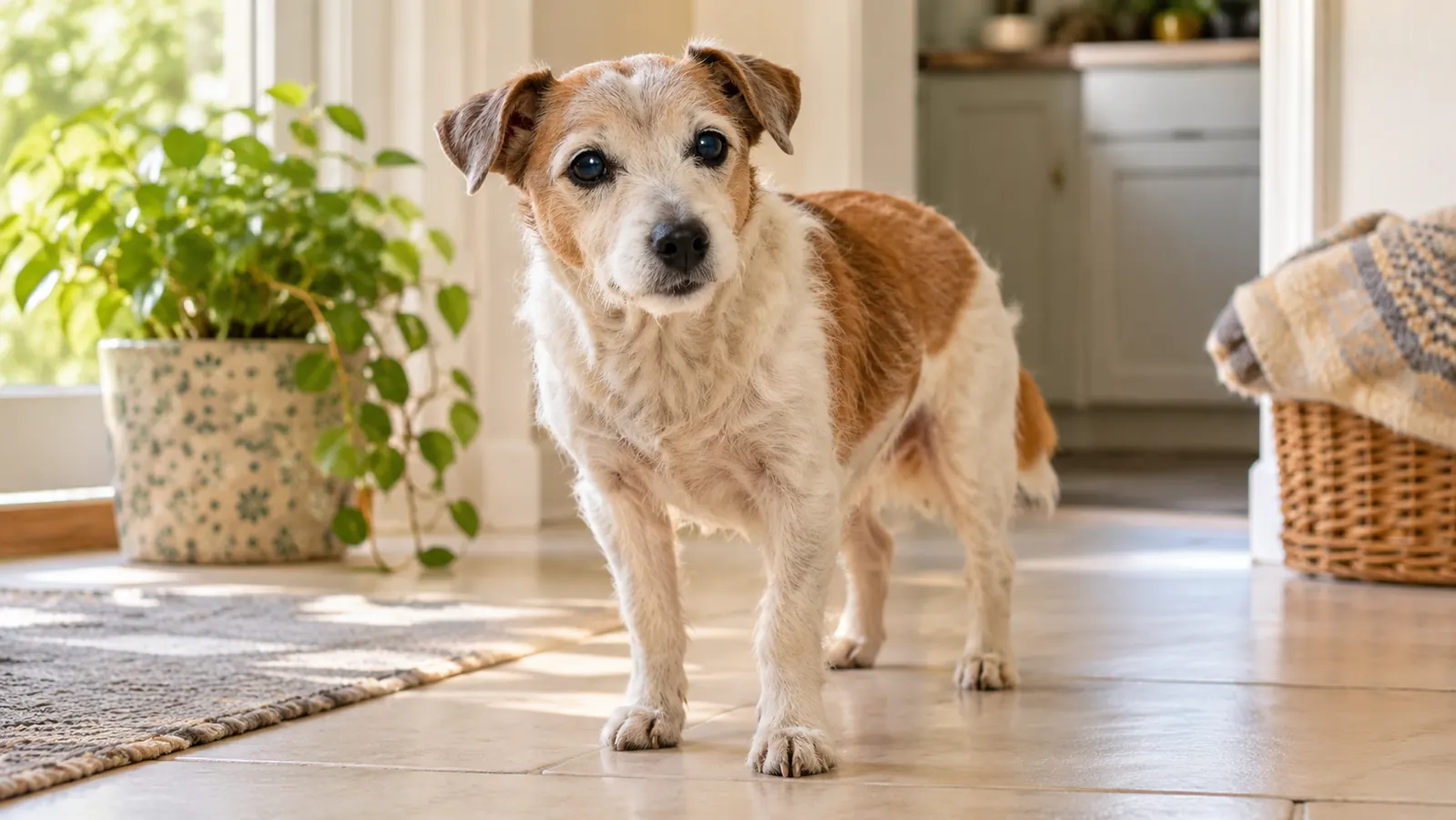
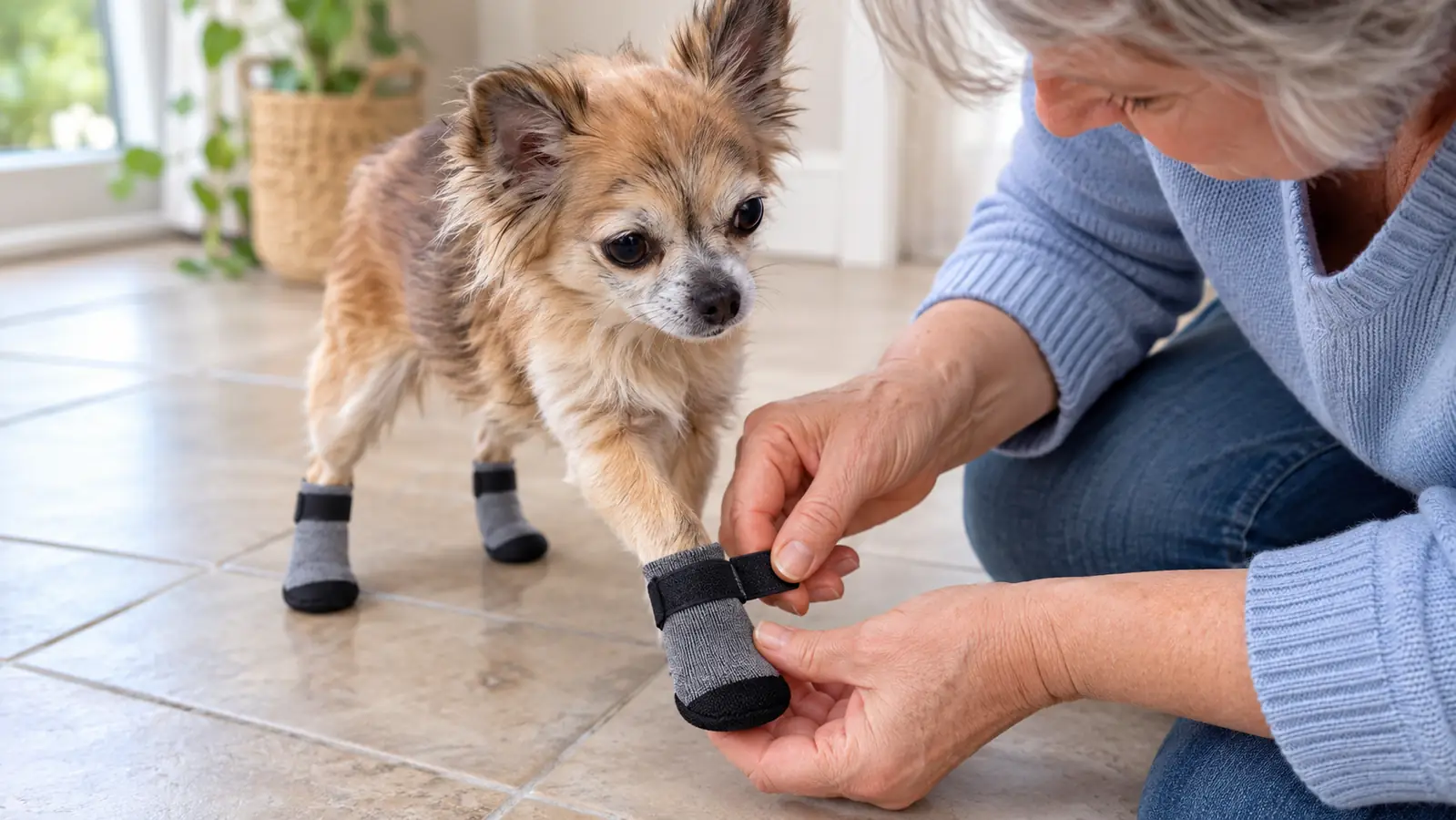
The grip is the reason I keep putting these on him. DOK builds the tread to keep working when the sock twists, and if you have never had a small dog in socks you may not know why that matters so much. A six pound dog does not walk so much as scribble. Every step rotates the sock a quarter turn, and by the end of a morning the tread that started under the pad is somewhere off to the side. A thin printed sole is doing nothing at that point. The TigerToes tread still has something to grab with, and on tile I can see the difference in how he carries his back end, especially on the first trip down the hallway after a nap. There is a stretch of tile from the bedroom to the kitchen, maybe fourteen feet, with the living room rug off to the left. Before the socks he took that stretch in a crouch with his back legs wide and stopped twice to think about it. Now he walks it more or less straight through. It is not a trot. It is not what he did at eight years old. But he is not bracing, and bracing is the thing I was trying to get rid of.
The rest of it is unglamorous and that is fine with me. The fabric is elastic cotton and nylon, so it stretches over the paw without me wrestling a stiff old dog who has opinions. The closure is hook and loop plus a pull-on cuff, which means I can get it snug at the ankle instead of guessing. They machine wash, which is not a small thing in a house with tile and a dog who goes out to the patio. They come four to a set, and that matters more than it sounds, because one will go missing and you will look for it under the sofa for a week.
Where Expawlorer Wins
The Expawlorer strap wraps higher up the leg. That is the honest difference, and for some dogs it is the whole ballgame. A sock almost never comes off because the grip failed. It comes off because the strap lost its purchase at the ankle, and a dog with a narrow ankle and a busy back foot can work a low strap loose in about ten minutes if he is committed to it. More wrap surface higher on the leg gives that dog less to fight against. If your dog has already beaten two pairs of socks, that is the feature I would chase first, and I would not argue with you about it. I have watched Pepper do the exact thing I am describing. He will stand on three legs and rake at a strap with the fourth, and he is patient about it in a way that is genuinely impressive. On a strap that sits low at the ankle he finds a corner to lift. On a wrap that sits higher up the leg there is more distance between his mouth and the edge, and that distance is the entire design.
I will also say plainly that I am judging that from listing photos and a description, not from a set on my own dog's feet. What I would want to test is whether the higher wrap stays put without riding up the leg during the day, and whether the tread is thick enough to survive the same quarter turn I described a moment ago. Those are the two questions I cannot answer from my kitchen in Arizona, and I would rather leave them open than pretend I know.
The sock that survived eight months of tile, not eight minutes
Four to a set, elastic cotton and nylon, with tread that keeps grabbing even when the sock rotates under the paw. It is the pair I measure every other sock against.
Amazon Check Today's Price on Amazon →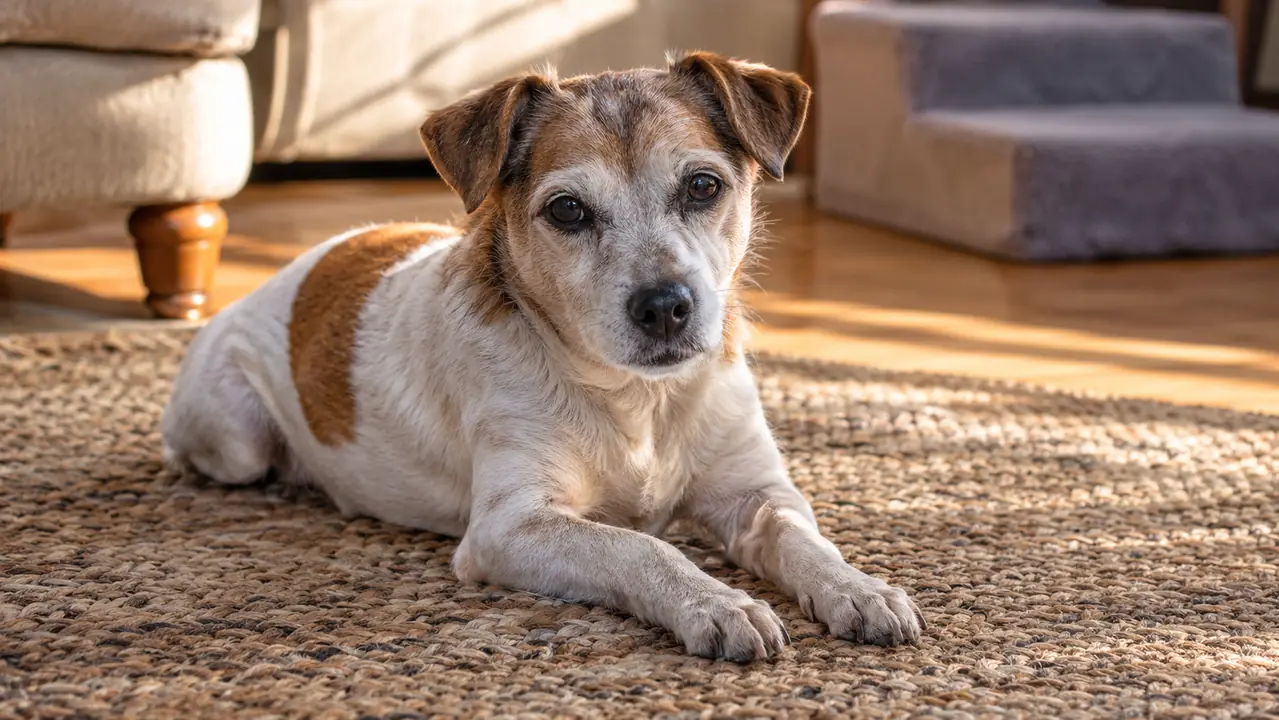
Who Should Buy Which
Buy the DOK TigerToes if your problem is the floor. Tile, hardwood, a kitchen that turns into a skating rink at six in the morning. If your dog's back legs slide out and the front end keeps going, the thick tread is the part that earns its keep, and the twist resistance is what makes it last past the first week instead of the first hour. That is my dog exactly, and eight months in I have no plans to change. I put them on for a few hours in the morning and again in the evening. Never overnight and never on a walk, and I check his paws every single time they come off, because a wrinkle left alone will rub a spot raw before you notice. The first week was not pretty. He high stepped around the living room like the floor had turned to hot sand, lifting each paw well past what the job required and giving me a look that said this was my fault, which it was. By about day seven he had forgotten them entirely and was asking to go out to the patio still wearing them, which I do not allow. Tread on tile is one thing. Tread on gravel is another. Eight months on, all four are still with us, though one disappeared for eleven days and turned up under the bed where he hides things.
Try the Expawlorer first if your problem is the sock coming off. Some dogs treat a sock as a personal insult and go to work on it the second your back is turned, and a higher wrap gives them less to grab. That is a real difference and I am not going to talk it down just because I happen to like mine. The fair way to decide is to look at your dog's ankle rather than at my review. Thin ankle and a busy back foot points one way. Slipping on tile points the other. If both are true, start with grip and keep the strap tight.
The Measuring Part Nobody Warns You About
Whichever you buy, measure first, and measure with the dog standing. Put a piece of paper under the paw, press the paw flat, mark the widest point across the pads, and carry the paper somewhere with good light. Weight is not a size. My dog is six pounds and the Small on the DOK listing, 1.7 to 1.9 inches, would have been a loose sock on him, so we went to extra small. A sock that is even a little too big rotates more, and rotation is the exact thing you are paying to avoid. Write the number on the back of a receipt and tape it inside a cabinet door so you are not measuring again in six months, and so your husband can order the right thing without calling you from the pet store.
Then do the two-minute check on the day they arrive. Sock on, strap snug, dog down the hallway and back. Take it off and look at the skin above the strap. Pink is fine. A deep groove that is still there a minute after the sock is off means it is too tight, and too tight is worse than too big because you will quit using it. I learned that with a boot years ago and I have not forgotten it.
The strap is what keeps the sock on. The tread is what keeps the dog upright. Those are two different jobs, and only one of them shows up in a product photo.
What Neither Sock Fixes
Socks do not fix arthritis, and they do not fix a loose kneecap. Pepper still has both. He still gets up stiff after a nap, he still has slow days, and no sock has changed that. What the socks do is keep him from sliding while the rest of his setup does its work: the glucosamine chew Dr. Salazar started him on back in November 2025, the orthopedic bed he sleeps on now, the foam stairs at the sofa, and the lift harness I use on the one step down to the patio on a bad morning. Every one of those does a different job. The socks only do the floor.
I am not a vet and I am not going to write like one. If your dog is sliding, get the sliding looked at, especially if there is already a diagnosis in the file. Ask before you start a supplement, ask before you change an exercise routine, and ask about anything that has gotten suddenly worse rather than gradually worse. Socks are a floor problem solved with fabric. They are not medicine, and anyone selling them to you as medicine is selling you something else.
Eight months of tile mornings and it is still the pair I reach for
We ordered extra small for a six pound dog. Thick tread for the tile, machine washable for the reality of an old dog's day. Today's price is on the listing.
Amazon Check Today's Price on Amazon →