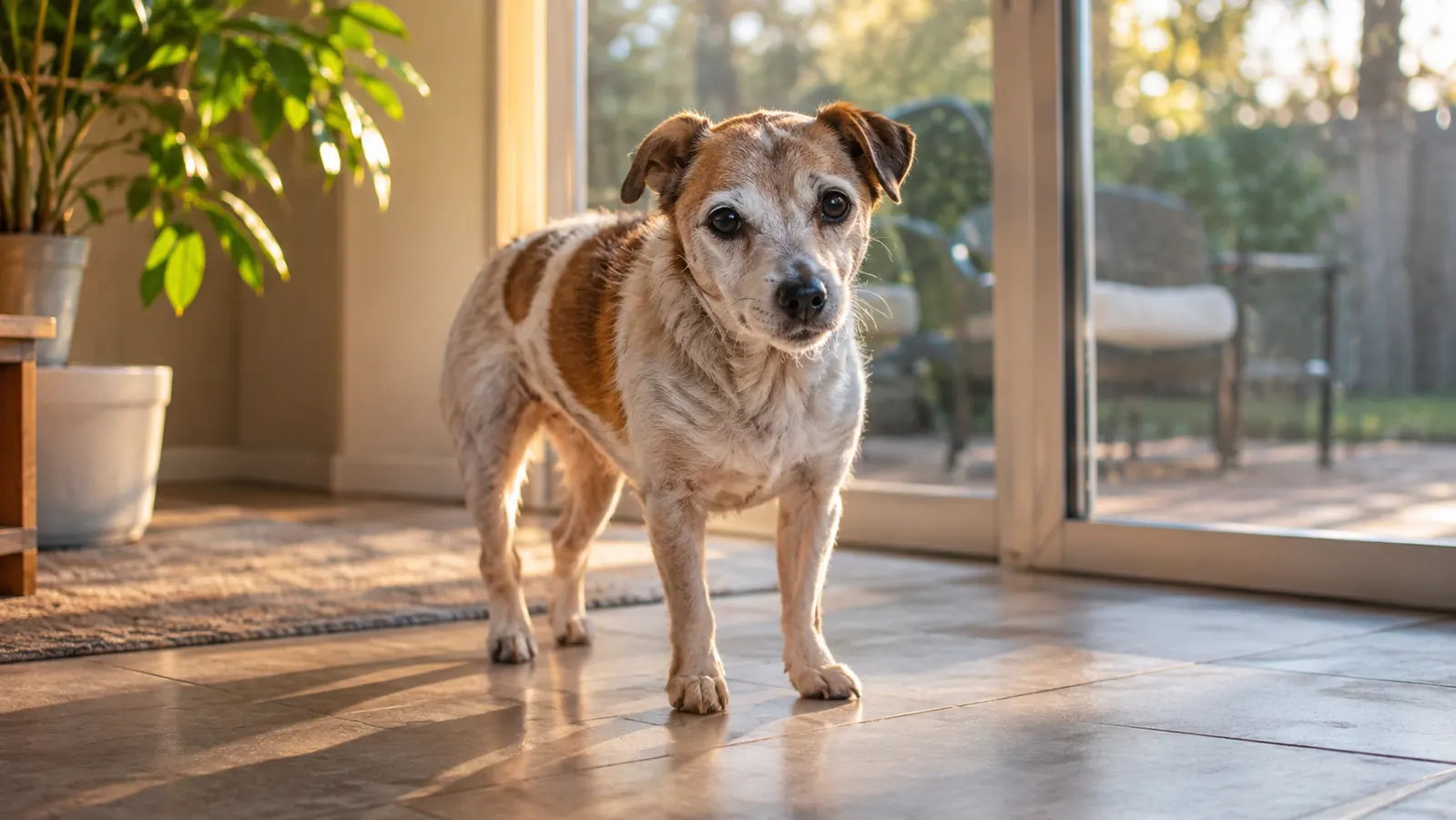
Pepper is thirteen years old, a Yorkshire Terrier who weighs about six pounds on a good day, and in June 2026 he had a week where his back legs would not hold him on the kitchen tile three mornings running. He did not cry. He just sat down and looked at me. That is the week I bought the PICK FOR LIFE lift harness.
I am not a vet and I will say that plainly, because I am about to talk about a dog with arthritis in his hips and a loose kneecap on his left back leg, and those are Dr. Salazar's words, not mine. What I am is the person who is home with him all day. The one who watches him get up from a nap and counts the seconds before he finds his footing. The one who got tired of watching him hesitate at the single step down from the kitchen door to the back patio, which is a distance of maybe four inches and might as well be a cliff some mornings.
The Quick Verdict
A rear sling that does one job and does it properly. On a six pound dog it runs roomy and the drawstring has to be cinched almost all the way closed, but it is the only thing in this house that lets me steady his back end at the patio door without hauling him up under the belly.
Amazon Check Today's Price →Ten seconds of help at the patio door is the whole reason I own this
A rear support sling with a drawstring closure and padded handles. It holds up the back end and lets your dog keep doing the walking.
Amazon Check Today's Price on Amazon →How I've Used It
I bought the size Small in June 2026, which is the smallest size on the listing, and we are five months in now. The drawstring is cinched almost all the way closed. On a six pound dog the sling is roomy, and roomy is the honest word for it. If Pepper were ten pounds I would have slack to give back. At six pounds I do not.
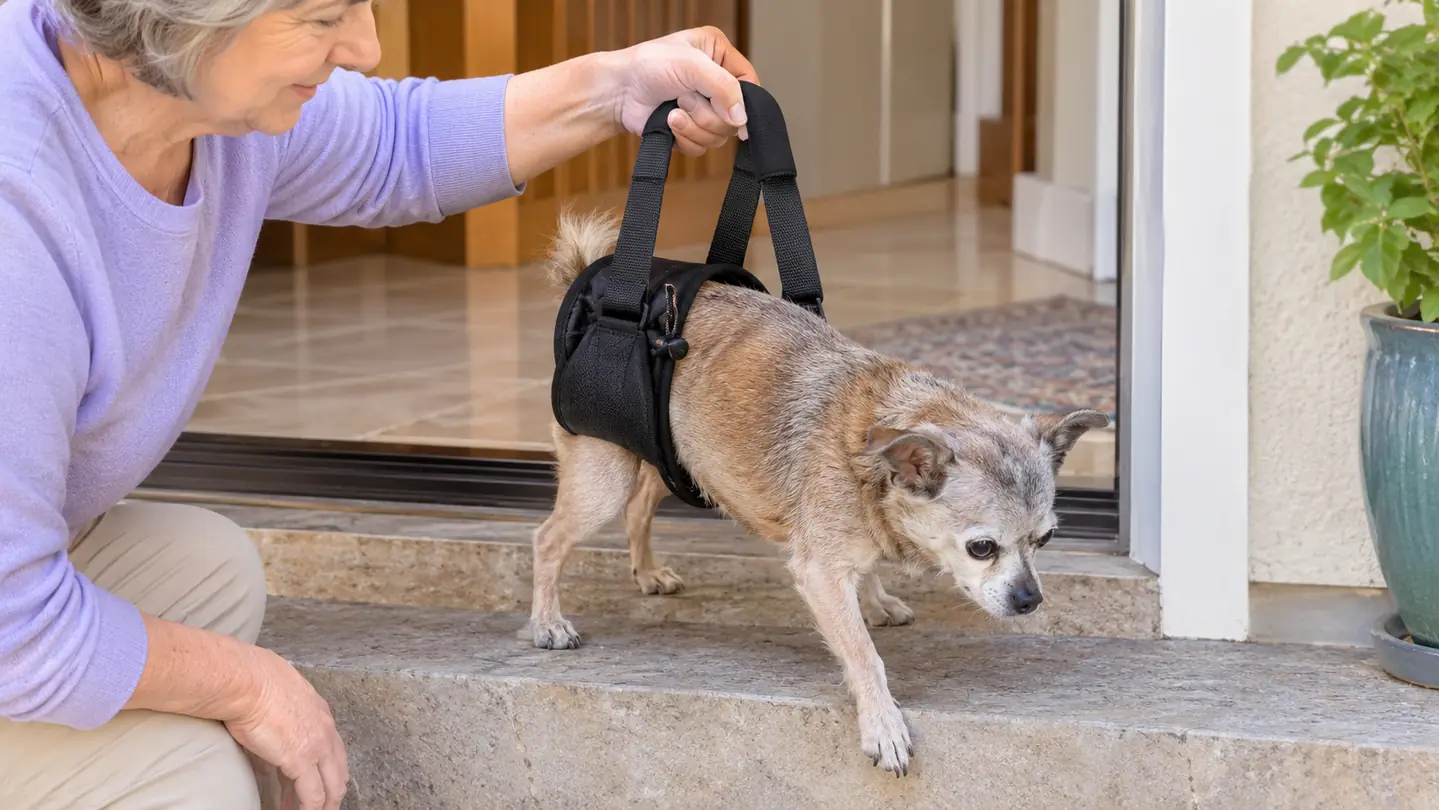
What the PICK FOR LIFE harness does is hold up his back end. Not his chest, not his front legs, not his middle. The sling goes under his rear, the drawstring gathers the fabric to fit, and the padded handles let me take some of his weight while he sorts out his own feet. He still walks. He still decides where each leg goes. I am only removing the part where his back end quits on him halfway through a step.
Real use in our house is about twice a week. It is not a daily thing and I want to be clear about that, because I read reviews where people make it sound like a permanent fixture. It comes out on the bad mornings, which usually follow a cold night or a long afternoon curled on the sofa. It comes out for the first stretch of the morning walk when he is stiff. On a good morning he takes the patio step slowly on his own and the harness stays folded in the storage bag by the door.
And here is the part that matters more to me than the harness itself. I use it instead of scooping him up under the belly. He never liked that. He would tense, tuck his back legs, and turn into a stiff little board in my arms, which made a six pound dog feel like he weighed fifteen. With the sling he stands still, I take up the slack, and we go down one step together like two people sharing an umbrella.
What It Actually Does, and What It Doesn't
It is a rear support sling. That is the entire product. The listing calls it an adjustable dog lift harness for small dogs with hind leg support, and that description is accurate as long as you put the weight on the word hind. It does not support the front of the dog. It is not a walking harness that a leash clips to for a normal loop around the block. It does not teach him to use his legs and it certainly does not make his legs stronger.
What it does is bridge a gap. There are a handful of moments in our day where Pepper needs ten seconds of help and nothing else in the house covers them. The patio step is one. The last thirty feet home on a walk, when he has decided he is finished and his back end is lagging behind his front end, is another. The PICK FOR LIFE harness covers both of those, and it covers them without me having to think about where my hands go.
It has not changed his diagnosis, and I would distrust any product review that told you it did. He still has arthritis in his hips. He still has the loose kneecap on the left side. He still does not jump onto the sofa, which is why the stairs live on the living room rug, and he still does not get up on the human bed, which is too tall for those stairs anyway. Nothing I have bought this year reversed anything. What the harness has done is keep me from making his back worse with a clumsy lift, and that is a real thing to get for the money.
The Drawstring Is Most of the Story
I did not expect the closure to matter as much as it does. It is a drawstring. Not a buckle, not a clip, not hook and loop. You set the sling under the dog, pull the cord, and the nylon gathers in around him. That gathering is the difference between a sling that holds and a sling that hangs.
For Pepper it is the difference between the product working and the product sitting in a drawer. A six pound Yorkie is narrow through the hips. Anything built to cover the whole small dog range is going to be generous on him, and this one is generous. Cinching the drawstring almost closed is what makes it grip instead of swing.
The tradeoff is that it takes two hands and a few seconds to get right. The first few days Pepper would not stand still for it. He would take a step, I would come after him with the sling, he would sit down and give me a look. It took maybe four or five days of doing it in the same spot, right at the patio door, before he worked out that standing still for ten seconds made the step easier. Now he waits. Not cheerfully. But he waits.
Five Months In: The Bad Mornings Got Shorter
The honest way to measure whether something worked in this house is to measure how long a bad morning lasts. Before June, a bad morning meant twenty minutes of Pepper circling the living room rug trying to get his back legs organized, with me hovering over him being no help at all. Now it means I bring the harness out, we do the patio step, we do a short version of the block, and he settles. Ten minutes. Twelve on a bad one.
That is not a cure. That is a shorter bad morning. For a thirteen year old dog with a known kneecap issue, I will take ten minutes over twenty every single time. I would rather have a smaller problem than a promise that the problem is gone.
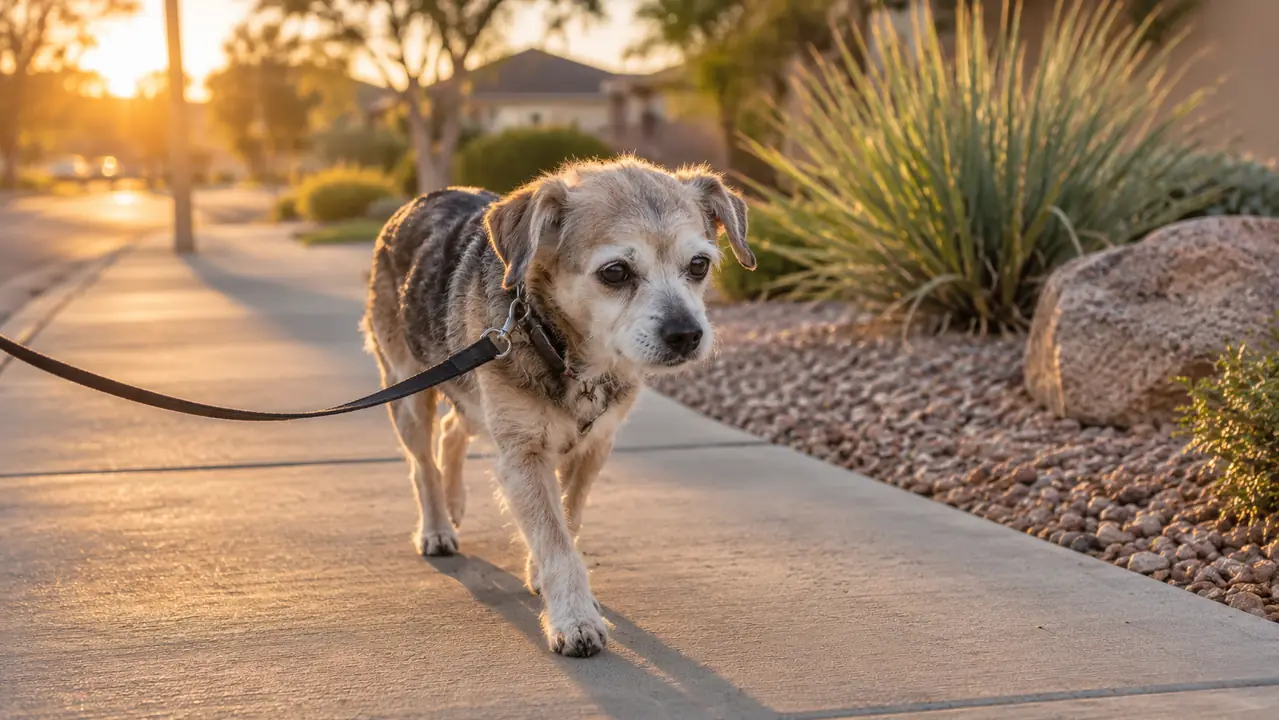
The walk is the other place it earns its spot. Our routine is a slow ten to fifteen minute loop around the block early, before the heat gets into the pavement and before his feet get hot. On a stiff morning he starts that walk with his back end low and his stride short. The harness lets me carry a little of the rear for the first hundred yards, and somewhere around the corner he loosens up and does not need me for the rest of it. I have never used it for a whole walk. I have used it for the start of a walk plenty of times.
One thing it does not do on the walk: it does not stop him from pulling toward a smell, and it does not stop him from deciding halfway around that the shade under a mesquite tree is a better plan than the sidewalk. It is not a training tool. It is a hand.
What I Don't Love About It
Three things, and the first is sizing. Size Small is the smallest size on the listing, and on a six pound dog it is still bigger than I would like. The drawstring does all the work of fitting it, and I am doing most of my cinching on the first inch of cord. On a five pound dog I think I would be fighting it. The listing recommends small dogs, and small covers a lot of ground, and the smallest end of that range is where this product is least comfortable.
The second is the warranty, which the listing states as seven days. Seven days is not much of a cushion if something gives out in week three. It has held up fine through five months of light use, and it is nylon with a machine wash care instruction, so there is not a great deal on it that can fail. But I noticed the seven days when I bought it and I did not love it, and I am not going to pretend otherwise now.
The third is that it is a two hand job. On a dog who does not especially want to stand still, one hand goes to the dog and one goes to the sling and there is no hand left for the door. I have learned to hold the patio door with my hip while I do the step. It is a small thing. It is still a thing, and it is the kind of thing that shows up every single time you use it.
What I Liked
- Holds up the back end only, which is exactly the part that gives out on him
- The drawstring cinches down far enough to fit a narrow six pound dog properly
- Padded handles stay comfortable through a full morning's worth of short assists
- At 4.8 ounces it lives in the storage bag by the door and I forget it exists
- Nylon and machine washable, which matters for something that sits under a dog's rear end
- Gave me a way to help him that is not hauling him up under the belly, which he hated
Where It Falls Short
- Size Small is the smallest on the listing and still roomy on a six pound dog
- The listing states a seven day warranty, which is thin
- Two hands to put on, which is awkward when you are also holding a door
- Takes a few days before a stubborn dog will stand still for it
- Rear support only, so it does nothing for his front end and nothing for the tile
Before June, a bad morning took twenty minutes. Now it takes ten or twelve. That is not a cure, but for a thirteen year old dog I will take it.
Who This Is For
If you have a small senior dog whose back end gives out before the rest of him does, this is the tool. Specifically: a dog who can still walk, still chooses where to put his feet, and just needs some weight taken off the rear for a few seconds at a time. That is Pepper to the letter. He is not down. He is not paralyzed. He is stiff and he is weak in the hind end and he needs a hand at four inches of patio step.
It is also for the owner who has been lifting a dog under the belly and getting a tense, unhappy, rigid dog in return. That was me for the better part of a year. The harness did not change the dog. It changed how I help him, and the difference in how he accepts the help is the part I did not see coming.
Before you buy anything at all, including this, run it past your vet. Dr. Salazar is the one who told me what was wrong with Pepper's hips and his left knee, and she is the one who told me to keep him moving gently rather than resting him all day. I would not have known to do that on my own, and a sling is not a substitute for that conversation. It is what you do after you have had it.
Who Should Skip It
Skip it if your dog cannot bear weight at all on the back legs. This takes some of the load, not all of it, and a dog who is fully down needs a different conversation with a vet and probably a different piece of equipment entirely.
Skip it if what you actually need is help with the front end, or with tile floors, or with getting onto the sofa. Those are three separate jobs in our house and they belong to the socks and the stairs, not to this. Buying the wrong tool for the wrong problem is how a useful product ends up in a drawer and gets a bitter review it did not deserve.
And skip it if you are hoping for something that makes a dog stronger or slows the arthritis down. It will not. That is not a knock on the PICK FOR LIFE harness. It is a sling with a drawstring and padded handles. I have bought plenty of things expecting more than they were built to do, and I would rather tell you plainly what this one is so you can decide with your eyes open.
One step, twice a week, and a dog who stands still for it now
Rear support sling, drawstring closure, padded handles, 4.8 ounces, machine washable. Five months in and it still lives by the patio door.
Amazon Check Today's Price on Amazon →