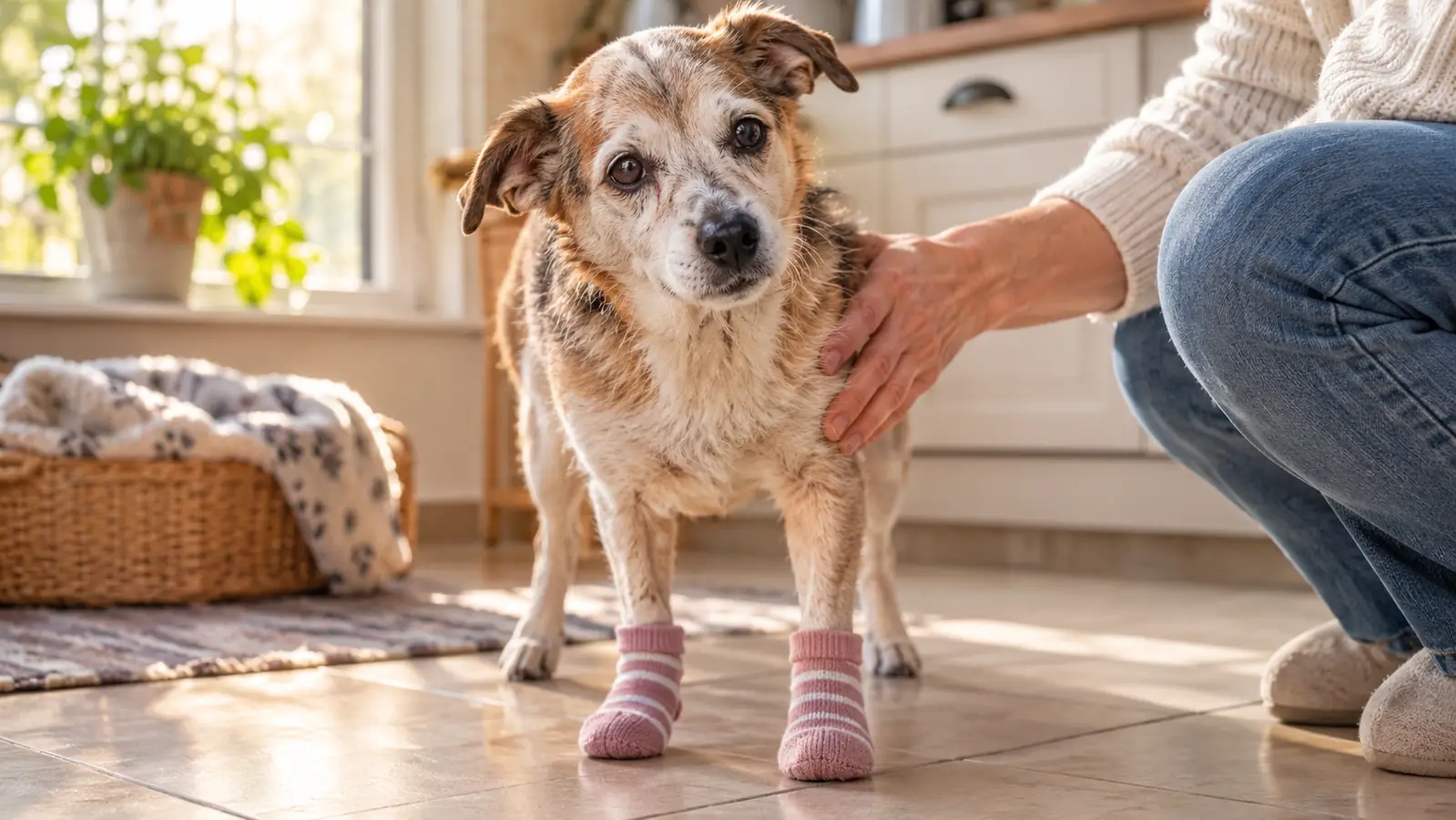
Pepper's back legs slid out from under him on the kitchen tile in March, and dog socks were not the first thing on my mind. My first thought was that I had let him down. He is thirteen, a Yorkshire Terrier, about six pounds, and Dr. Salazar had already told me his hips had mild arthritis in them and that the kneecap on his left back leg was loose. She had also told me, gently, that tile is unforgiving for a small old dog. I knew all of that before it happened. Knowing a thing and watching your own dog splay out like a fawn on ice are two different experiences, and the second one got me off the sofa.
So this is an honest review of DOK TigerToes grip socks, written by a woman who owns exactly one dog and is not a veterinarian. Nothing here is medical advice. If your dog has a diagnosis, talk to your own vet before you buy anything, socks included. I have had these on Pepper for about eight months now, since March, and I bought them the way anybody would. What follows is the part I wish the listing had said out loud: what these socks actually fix, what they do not, and the handful of places where a real six pound dog and a size chart disagree with each other.
The Quick Verdict
The only thing that got Pepper crossing the kitchen without a back leg sliding out. Size it off a real paw measurement, take them off for walks, and check the paws daily. They will not make an old dog young.
Amazon Check Today's Price →The purchase that got an old dog walking back into the kitchen
DOK TigerToes grip socks come four to a set, machine washable, with a hook and loop strap that goes on one handed. The listing has a size dropdown, and the first thing to do is measure the paw, not guess.
Amazon Check Today's Price on Amazon →How I Have Actually Used Them
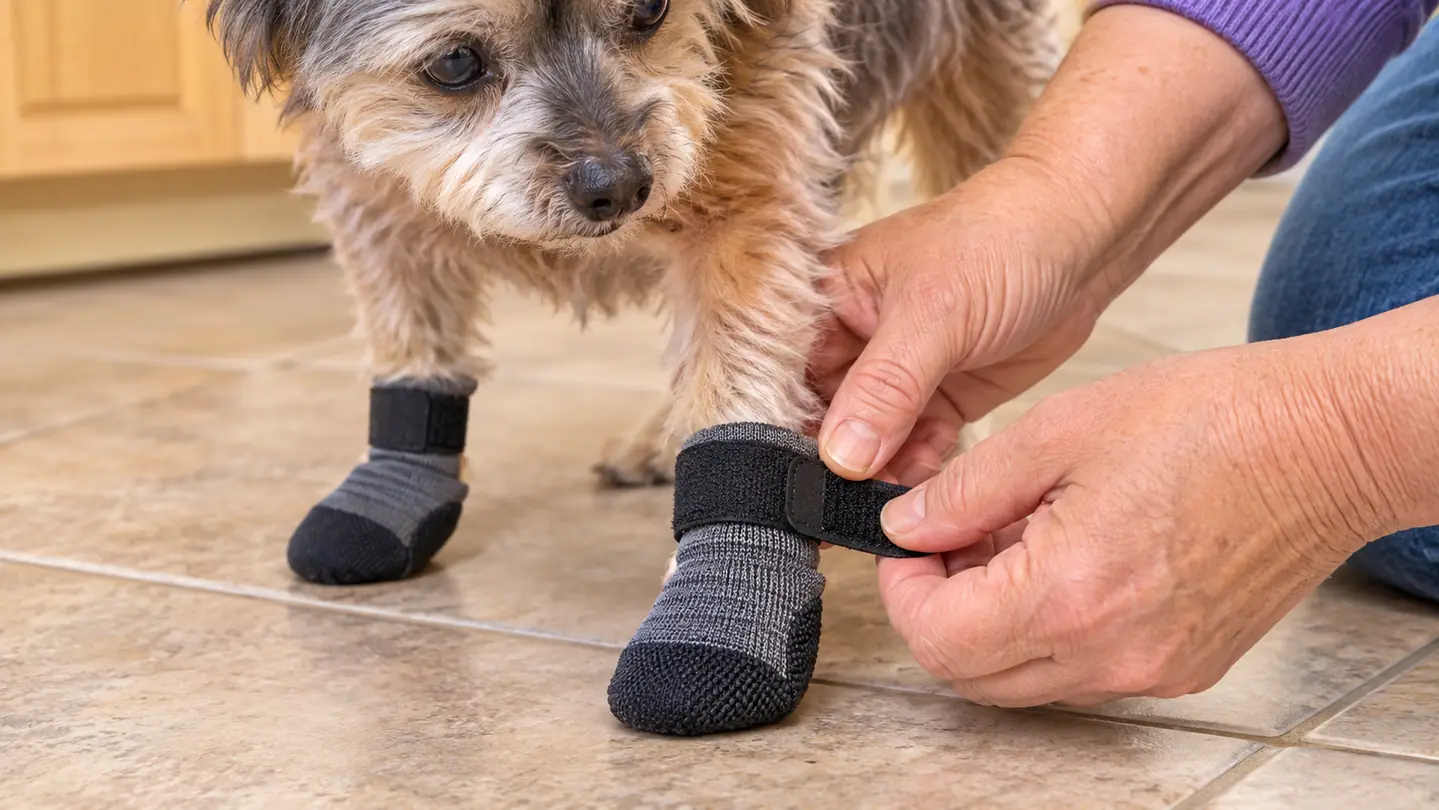
The set is four socks, and that matters more than it sounds like it should. A small old dog who licks at one back paw will soak one sock faster than the other three, and having a spare in the drawer means you are not running a load of laundry at nine at night because tomorrow is a tile day. They go on with a hook and loop strap around the ankle, and the fabric is a stretchy cotton and nylon blend that gives as you work it over the paw rather than fighting you.
Pepper wears his indoors, a few hours in the morning and a few hours in the evening. Never overnight. Never on a walk. That is not a rule from the label, it is a rule I made after the first week, and I will explain why further down. When the socks come off, which is every single time, I turn each paw over and look at it. Between the toes, around the pads, at the spot where the strap sits. Eight months in, the paws look the same as they did in March, and honestly that is the most I can ask of anything I put on him.
The first week was a production. He high stepped around the living room like a drum major, lifting each foot well above the floor and setting it down with visible suspicion. If you have ever put booties on a dog and watched the dignity drain out of him, this is that, but shorter. By day seven or eight he had stopped noticing. Now he stands still while I put them on, mostly because he has worked out that standing still is faster than the alternative.
The Size Chart Is the Whole Ballgame
Here is the paragraph I would hand to every toy dog owner if I could, because it is the one thing that decides whether these work. The listing has a size dropdown and the sizes are not interchangeable. The Small is listed for a paw width of 1.7 to 1.9 inches. That sounds like a small foot, and it is, but a six pound Yorkshire Terrier has a narrower paw than that number suggests. Before I ordered anything, I put Pepper on the kitchen counter, laid a ruler across the widest part of his front paw while he was standing on it so his weight spread the pads, and wrote the number down on the back of an envelope.
His measurement came in under the bottom of the Small range. I ordered the Extra Small from DOK and it fit the first time. If I had guessed, and I nearly did, I would have bought the Small because he is by any reasonable definition a small dog, and I would have been packing them up and sending them back within the week.
The wrong size fails in a very specific way, and it is worth describing so you know what you are avoiding. A sock that is too big slides down the leg and bunches at the ankle. The strap has nothing solid to cinch against. The grip ends up folded under the paw in a wrinkled lump instead of lying flat against the tile, and that is worse than bare feet because now the dog is walking on a lump as well as on a slick floor. The entire point of the thing is contact.
I will be fair to DOK here. The size information is on the listing and the stretchy fabric gives you a little forgiveness, so this is not a trap. But it does fall on you to know which end of the range your dog sits on, and a terrier foot sits at the low end. Measuring a paw takes ninety seconds. Measure it standing up, and measure it twice, because the first time your dog will move.
What Eight Months on Tile Has Taught Me
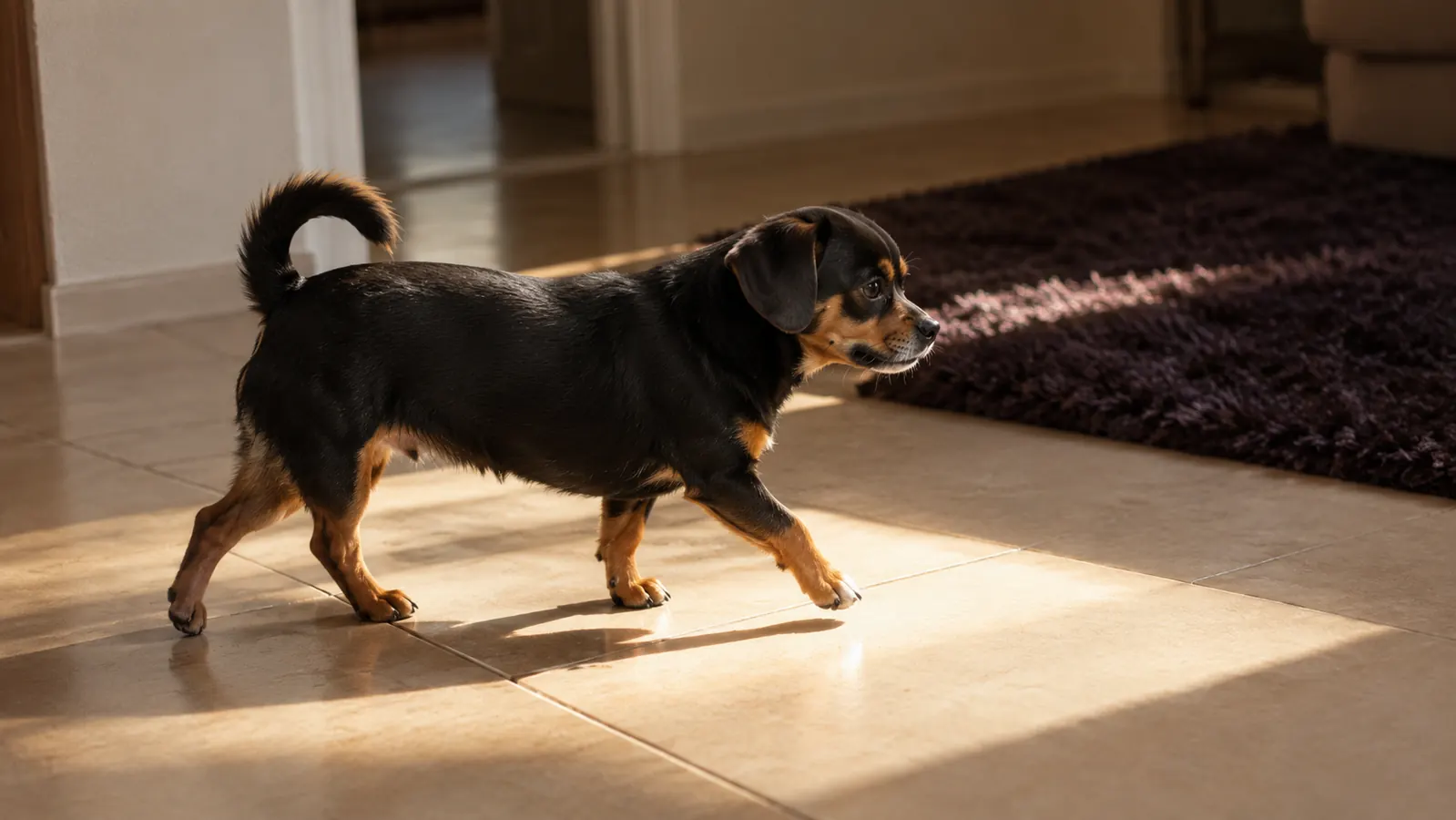
Our house is tile from the front door to the back, with one area rug in the living room. That is a lot of slick floor for a dog who weighs about what a bag of sugar weighs. Before March, Pepper walked the kitchen the way a man crosses a frozen pond: short, quick, careful steps, no confidence in any of them, and every third or fourth step one back leg would slide out sideways and he would have to stop and reset.
With the socks on, he walks. Not fast, not like a puppy, no bouncing. But he crosses the kitchen without the sideways slide, and he turns a corner without that little skid at the end of it. The difference is not dramatic from the outside. Nobody watching would gasp. From the inside, from where I sit with my coffee, it is the difference between a dog who avoided the kitchen and a dog who follows me into it again, which he had quietly stopped doing sometime in February.
The listing says the grip is engineered to work even when the sock twists. I was skeptical of that line because it is exactly the kind of thing a listing says. Eight months in, I would call it mostly true, and true in the way that actually matters. The socks do rotate. They rotate on the second or third hour, they rotate more on the back feet than the front, and they rotate most when he has been lying down and stands up quickly. But when they have rotated, he is still not sliding. The grip runs further around the sock than I expected, so a rotation moves the contact point rather than removing it.
Washing is machine wash, which is what I do, in with the dog towels, then air dried over the back of a chair because I do not put anything with a strap in the dryer. Eight months of twice weekly washing and the elastic has held. The grip has dulled some at the heel end, which is where he puts the most weight. If I had to guess I am another six months from replacing the set. That is a guess, not a promise, and I will be annoyed if it is four.
What Nobody Tells You
He does not love them. I want to be plain about that, because any review telling you a dog loves wearing socks is selling something. He tolerates them. He stands still while they go on, he walks normally in them, and the high stepping is long gone. But when I sit down on the floor at the end of a session, he comes to me and waits. That is not a dog who has forgotten he is wearing socks. That is a dog who knows they come off and would like it to happen now.
The strap is the part to watch. Hook and loop is fast, it holds, and I can do it with one hand while the other hand keeps six pounds of opinionated terrier from walking off, which matters more than it sounds. But it is also the piece that sits against the ankle, and on a dog with almost no fur on his lower legs, a strap done up snugly enough to stay put is a strap you have to check. I check. Every time they come off, I look at the ankle.
Nobody tells you about the paw checks either. A sock traps warmth and it traps whatever the dog walked through before you put it on. I do a quick look at each paw when the socks come off: between the toes, the pads, the skin around the nails. Twice in eight months I found a small dried bit of something caught inside the fabric. Nothing alarming, both times dealt with in seconds. But if your dog has a history of paw licking, which is one of the things these socks are sold to discourage, the check matters more rather than less, because a covered paw is a paw you cannot see.
And the honest one, the one I would want somebody to tell me. These socks are not a solution. They are a floor. They change what happens when Pepper's feet meet tile. They do not change the arthritis, they do not tighten the kneecap, and they do not make him want to walk further than the end of the block. He is still an old dog with a bad left leg, and on a damp morning he is still stiff getting up. Any product claiming otherwise is selling you a feeling.
Where They Do Nothing at All
Walks. The socks stay in the house, and that was my call rather than the label's. Tucson sidewalks in July are their own problem, and our morning loop around the block is barefoot, at his pace, ten or fifteen minutes before the sun gets serious about the day. The socks are waiting by the door when we come back in.
The one step down from the kitchen door to the back patio. Socks on flat tile are one problem. Socks on a step edge are a different problem and I did not care to find out how that one goes. On a bad morning I use the lift harness with the rear sling for that step. On a good morning he takes it slowly on his own, one foot at a time, and I stand there with my heart in my throat like I do every time.
The sofa, which is the foam stairs and a separate thing entirely. Sleep, which is the orthopedic bed on my side of the bedroom. The joints from the inside, which is the glucosamine chew he gets every morning with breakfast, set by Dr. Salazar and something you should set with your own vet rather than copy from me. And the car, where he still gets picked up, one hand under the chest and one under the rear. Socks do not help a dog get into a car. Nothing about them does.
The socks do one job. They keep his feet under him on slick floor while he is awake and moving, for a few hours at a stretch, twice a day. Judged by that job they are the best money I have spent on him this year. Judged by any other job you might invent for them, they are four small socks in a drawer.
What I Liked
- Sized by actual paw width, so a narrow terrier foot can be fitted instead of guessed at
- The grip still holds when the sock rotates, which it will, mostly on the back feet
- Four to a set, so one wet or grubby sock does not stop the whole morning
- Machine washable and the elastic has survived eight months of twice weekly washing
- The hook and loop strap can be fastened one handed with a squirmy dog in the other
- He crosses the kitchen and follows me into it again, which he had stopped doing
Where It Falls Short
- The correct size is not the obvious size, and a wrong guess fails badly
- He tolerates them rather than liking them, and he asks for them to come off
- Not something I would use outdoors on a Tucson sidewalk or on a step edge
- The grip dulls at the heel end over months, so this is a repeat purchase eventually
- Daily paw and ankle checks are part of owning them, not optional
The socks do not make him young. They make the kitchen a place he is willing to walk into again, and at thirteen with a bad left leg, that turned out to be worth more than I expected.
Who This Is For
This is for the owner of a small senior dog on hard flooring who has watched a back leg go out and felt their stomach drop. Especially a toy breed, especially a dog under ten pounds, especially a house with tile or hardwood and not much carpet. It is for someone willing to spend ninety seconds with a ruler before ordering, because the sizing is where these either work or do not. And it is for someone who will actually do the paw checks and take the socks off for walks, rather than leaving them on all day because it is easier. If that is you, DOK TigerToes is a sensible, unglamorous purchase that does exactly what it says.
Who Should Skip It
Skip it if you want a fix rather than a floor. These socks will not slow the arthritis, they will not stabilize a loose kneecap, and they will not replace your vet, your dog's medication, or your dog's bed. Skip it if your dog chews at anything on his feet, because a chewed strap is a choking hazard and no sock is worth that argument. Skip it if your floors are mostly carpet, since the grip has nothing to do there. Skip it if you are going to leave them on overnight or send the dog out the door in them. And skip it if nobody in the house is willing to check four paws twice a day, because that check is the price of admission. For everybody else with a small stiff dog and a lot of tile, this is the one I would buy again.
Measure the paw, then order the size below the one you think you need
Four grip socks per set, hook and loop strap, machine washable, sized off real paw width. Eight months on Tucson tile and Pepper still walks the kitchen in his.
Amazon Check Today's Price on Amazon →